


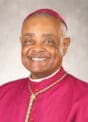
 Archbishop Wilton D. Gregory was the sixth archbishop of the Archdiocese of Atlanta. During his years of service, he wrote a regular column for The Georgia Bulletin entitled, "What I have Seen and Heard".
The Baby who can truly change everything
By ARCHBISHOP WILTON D. GREGORY, Commentary | Published December 22, 2016 | En Español
A baby changes everything! Just ask any young couple who have been blessed with a new infant, and they will tell you that their lives were immediately turned upside down—happily so—when a baby entered their world. Some night sounds that might have gone unnoticed will now rouse them from a deep sleep. Their organized living spaces quickly become rearranged. Routine schedules suddenly become unpredictable.
But these life interruptions are a small price to pay for the sheer joy of welcoming a baby into one’s life. And grandparents are prime participants in the life-changing events that welcome a baby.
Christmas celebrates the entrance of a Baby into all of our lives. And this entire world needs to be changed by this birth. This Baby brings with him the promise of a new world order where the poor and neglected are given new importance and where peace and harmony within the human family are goals that turn into foremost significance.
This Baby invites the rich and famous to become deeply concerned about those who live on the periphery of society. The birth of this Baby turns our frequently confused world upside down like newborns always manage to do.
The birth of this Baby brings hope and joy to all creation and not just to a single family. In fact, the birth of this Baby means that we all become members of one family—God’s family—united across cultures, political opinions, economic conditions, races, genders and nations.
Perhaps this is why Christmas looms with such significance across the globe. Whether people are Christian or not—whether they happen to be religiously active or not—the birth of this Baby offers hope and a brighter future.
When new parents bring their infant home, they begin a new life journey not simply for the baby but for themselves as well. This Baby offers that same type of life-altering potential.
All babies need more than mere nourishment and physical comfort. Every baby needs to be held and caressed. They need to discover that they are a part of a family wherein they are secure and treasured. The Baby that is born for the redemption of God’s creation brings with Him the promise of peace and hope for all of us. Christmas offers not simply a warm memory of an ancient event, but extends to the entire world the possible correction of our current fragile state of affairs.
There was a Baby who was born homeless in Bethlehem and eventually grew up in a home in Nazareth. This Baby came into the lives of Mary and Joseph, but in truth this same Baby longs to enter all of our lives to alter them forever. This Baby is God’s way of caressing and embracing all of us and changing each one of us in ways more far reaching and lasting than any baby who has ever entered a life or a home.
Merry Christmas, my beloved brothers and sisters in Christ. A Baby changes everything indeed!