|
By Father Noel C. Burtenshaw
He is back where it all began. And, for this
priest of Georgia, it all began 55 years ago in Savannah. He is Atlanta's
oldest priest, still laboring in the Georgia missions. As Chaplain to the
Georgia Regional Hospital, he serves the Church each day. And for Monsignor
Joseph G. Cassidy, each working day is eight hours long.
Monsignor Cassidy is the original kid from
Brooklyn. That's where life began for him 80 years ago. He and his 11 sisters
and brothers grew up on the famous sidewalks of New York. "Today," he says,
"they would call my father a sanitary engineer, but in fact he was a plumber."
The Cassidy children were all destined for a good education, and Joe, the
middle one, was destined for the seminary.
St. Joseph's Seminary in Dunwoody, New York, a
stiff and starchy place, prepared young clerics to serve the people of New
York. In a class of 60, young Joe felt he was headed, like the rest to a New
York City parish. It was not to be. His adventurous, spirited eyes looked
further. They, in fact, looked to the Chinese Missions. The Maryknoll
Missionary Fathers were young and persistently recruiting for the Far East. Joe
Cassidy felt he should volunteer.
But his life's destiny was changed by a certain
Father Tim Foley, up from the deep South, visiting his alma mater. "Why go to
China," he asked, "the same challenges are waiting in Georgia. Besides
Georgians are like the Chinese -- they eat rice and worship their ancestors."
Taking his word, the young Father Cassidy in May 1923 was ordained for service
in the Peach State. The adventure began.
The whole state had no more than 22 priests in
those days and not too many Catholics either. Father Cassidy spent his first
two years in the humid city of Savannah as Assistant Pastor in the beautiful
Cathedral of St. john the Baptist. Savannah immediately became his home and he
knew and hoped he would often return to it.
The infant city of Atlanta was next for him, where
he served for four years in the historic Shrine of the Immaculate Conception in
the heart of downtown. "Atlanta wasn't much in those days," says the
reminiscing Monsignor, "it was easy to walk all over town. We had to, on a
salary of $25 a month, cars were out of the question."
Four years later, he was sent further north. This
time as pastor to St. Mary's in Rome. His first pastorate and a seven-year
stay. With glee, he recalls those years. The parish church, still standing
today, was his brainchild. He recalls that the asking price for the land was
$10,000. We hadn't 10,000 pennies and the Bishop would not allow us to borrow."
Not to be stopped and without the "full knowledge" of the watchful Bishop Keys,
he pounced on 10 reluctant parishioners to borrow the money and put the price
on the line. The project was off the ground and Rome had its grand parish
church.
While serving in Rome,
an unexpected surprise came to the Catholic pastor. Each morning was spent with
his non-Catholic coffee club in the Busy Bee -- "the best hideaway in town." So
popular was this Yankee turned Rebel that they sent him on a dream trip.
"Thirteen weeks in Europe and the Middle East," he recalls. "They gave me
$1,300; the trip cost $900." He would repeat that journey on a number of
occasions but the first surprise, "that was the best."
In 1936, it was back to Savannah to the new Blessed Sacrament
parish and also the strangest adventure of his life. Along with the usual
pastoral duties, Father Cassidy was also appointed director of the Rural Life
Apostolate. While visiting a conference in Tennessee, he learned about the
Trailer Apostolate spreading rapidly in the wilderness of the Appalachian
Mountains.
"The Trailers" were, in fact, parishes on wheels. The priest was
driver, mechanic, pastor, teacher and street corner preacher. With enthusiasm,
he brought the news back to the Bishop -- then Gerald P. O'Hara. "After hearing
me out," he remembers, "he agreed the idea was a good one and we should try it.
Then he said he believed he had the man for the job. Who, I asked." The answer
was quick and decisive. Father Cassidy hit the road.
"I remember my first day with the Trailer," Monsignor says. "I
took it to a place called Lakeland near Valdosta and set it up in O'Brien's
field. Along the side of the 26-foot mobile home, we placed our name. It was
called Queen of the Apostles Motor Chapel."
He intended to stay two weeks in Lakeland. He stayed eight. Each
evening, the rural workers, mostly black, would come to enjoy the
"entertainment." Movies were shown, hymns were sung ("The Old Rugged Cross" was
a favorite) and instructions were given. The seed of the faith was sown. It was
then time to move on. Other priests would take the Chapel's place and establish
a parish as the Trailer rolled.
Father Cassidy and his pulpit on wheels rolled to every corner of
the state in two and a half years. Names like Pin Point, Gainesville, Toccoa,
and Isle of Hope -- all became familiar. On cold Georgia nights when outdoor
services were too uncomfortable, he rented town halls. "The first job would be
wood for the fire and then stoking it before unloading the Trailer." He recalls
renting the hall in Pin Point for seventy-five cents. "It was called the Poor
and Needy Hall," he grinned.
As the Cassidy Trailer rattled on, the Second World War was in
progress. Some of the movies shown were Italian with English sub-titles. A
local resident in one small town, hearing the foreign dialect from a distance,
believed spies had landed in Middle Georgia. The sheriff was summoned and
Father Cassidy was held for a little questioning. He was released, but the
files of the FBI will show that the incident was noted.
"Life on the road was an education," recalls the Monsignor. "I
learned about car engines and I learned about people. They both have their good
moments and their bad. But they come through when you need them, usually."
After his adventures on the road, Milledgeville and the parish of
Sacred Heart was next. It was here in 1941 he met his second love -- contact
with the largest mental health hospital in the world. He treasured those visits
to the unfortunate forgottens in that dread place. He would next go to the
parish in Thomasville, Albany, and then to the rectory of the Cathedral in
Atlanta -- but he never forgot the needs of those inmates in the State
Hospital.
When other men would be planning the quiet of retirement days,
after serving in Christ the King for 20 years, Monsignor Cassidy requested work
as Chaplain to the State Hospital in Milledgeville, which included care of the
Women's Prison. In 1965, this new Apostolate began and lasted over four years.
Now at the age of 67, Monsignor finally attempted
quasi-retirement. Taking an apartment in Atlanta, he assisted in the new parish
in Roswell and then back to his rural beginnings in Dalton, GA. But there was
no peace in retirement. Still, there were missions calling to this kid from
Brooklyn.
Recalling his deep interest in the work for mentally handicapped,
the authorities of the Regional Hospital invited the Monsignor to return as
Chaplain to the new hospital in Savannah. The temptation was too much
especially since they had no budget to cover his salary and his title would
have to be "volunteer." He jumped at the chance and he is there, back where it
all began.
"I have loved the years in
Georgia," Monsignor Cassidy testifies, "they were happy, all of them, for me."
He served under five different bishops during those years, and he has a concise
comment on them all.
"Keys was the best administrator. If you didn't
have it, you were forbidden to spend it. O'Hara was the exact opposite. Hyland
was a Saint. Hallinan never listened." And what about his present Archbishop?
"Well now," he grins, "he's a good man -- he's from Dunwoody (New York), isn't
he?"
Monsignor Cassidy is remembered for his passionate
love of the Yankees, but when they fired Yogi Berra, he transferred his love to
Monday Night Football. "A quarter to six on Tuesday mornings always comes
early," he quips.
You may call his home in Savannah in the evenings
and get no answer -- find that most understandable. He is listening to one of
his more than 200 complete operas -- earphones in place. Or he may be writing
his beautiful commentaries on Scripture verses for his special friends. New
things to do in his priesthood keep finding avenues in his glorious
young-at-heart life.
This is the final article in our "The Catholic
" series. We have attempted to highlight the lives of some of our
Catholic brothers and sisters in our communities. Meaning absolutely no
disrespect to that valiant group, we must say, fearing no disagreement, that
the best was reserved for last.
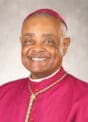
Monsignor Joseph Gerard Cassidy, Georgia mission
priest. And he is our Catholic.
|